Musuem Attractions
Big Bear Native American Museum
Honoring Native Americans
The Big Bear Native American Museum provides an invaluable educational experience for children and adults alike to learn more about Native Americans. The museum houses a vast collection of Native American artifacts donated by Leonard "Big Bear" Beal, a Native Texan and the museum's namesake.
In the museum you will find a wide variety of artifacts and historical pieces that are sure to provide a better understanding about Native American culture as a whole. The Big Bear Native American Museum aims to provide a comprehensive overview of the history of Native Americans in North American, from when they arrived here more...
Read The Rest
Blacksmith Shop
An 1800s Town Necessity
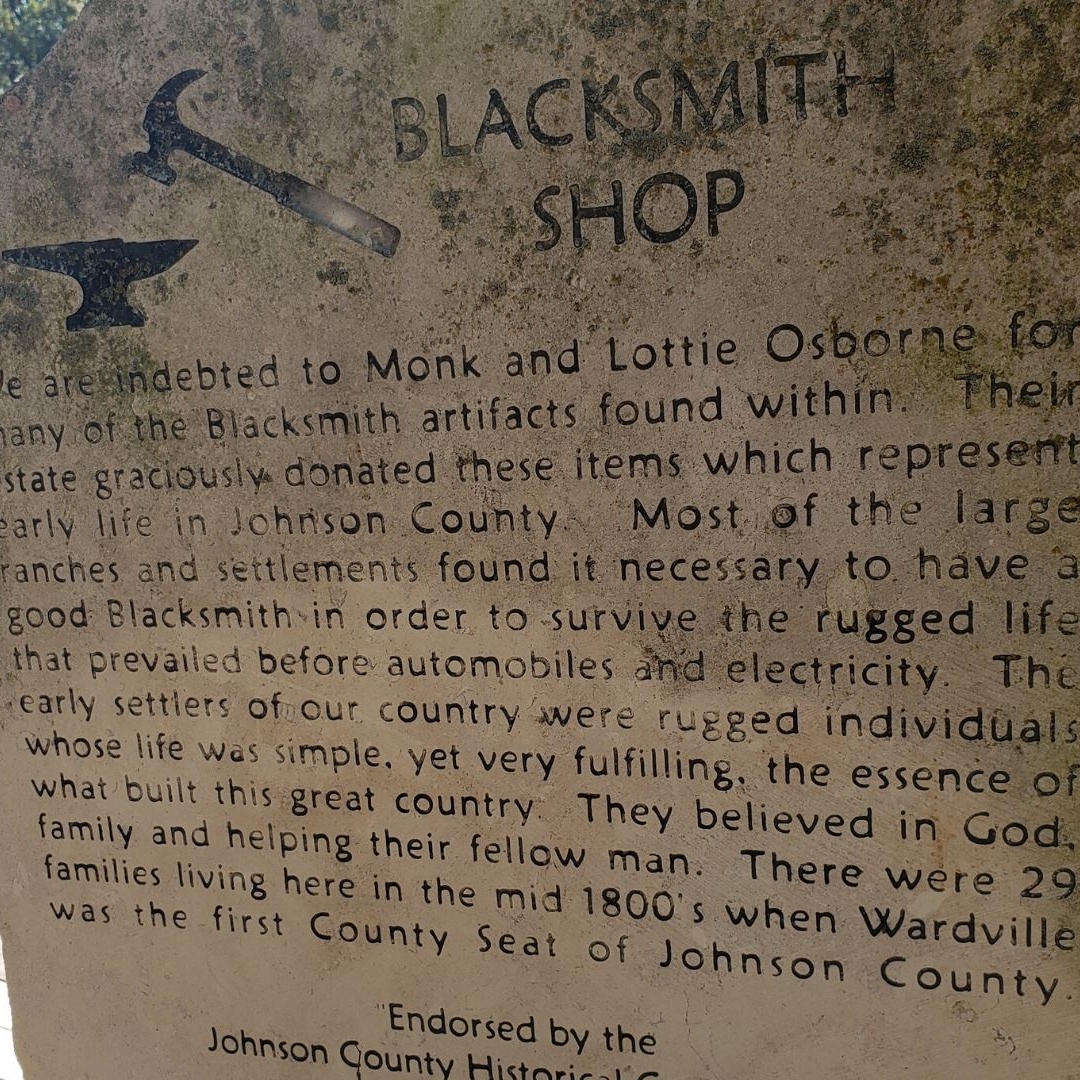
Back in the 1800s, every town had a blacksmith shop. We knew The Chisholm Trail Outdoor Museum couldn't accurately portray life in the 1800s without a blacksmith shop of our own. In 2009, we added this feature to our museum. We are proud to have our very own professional Blacksmith, Sam Keller, on site. Sam not only does blacksmithing demonstrations, he also sells many of his pieces in the shop.
In addition, the Blacksmith Shop also boasts a 150 year old anvil and a vise that has been used in shops for more than 200 years. There is also a horseshoe...
Read The Rest
Mule Barn
Original from the 19th Century
In the mid-1800s, horses were a hot commodity and were often stolen. Mules on the other hand? Not such a popular item. For this reason, many stagecoaches uses mules instead of horses to get where they needed to go.
When traveling long distances, stagecoaches often had to swap out their mule teams to safely reach their destination. The mules were kept in the mule barn for safe keeping waiting for the next stagecoach to swap them.
The Chisholm Trail Outdoor Museum was fortunate enough to receive a donation of an original mule barn from the Freeland Ranch. This mule barn is the...
Read The Rest
Nolan River School
Learning in the Past
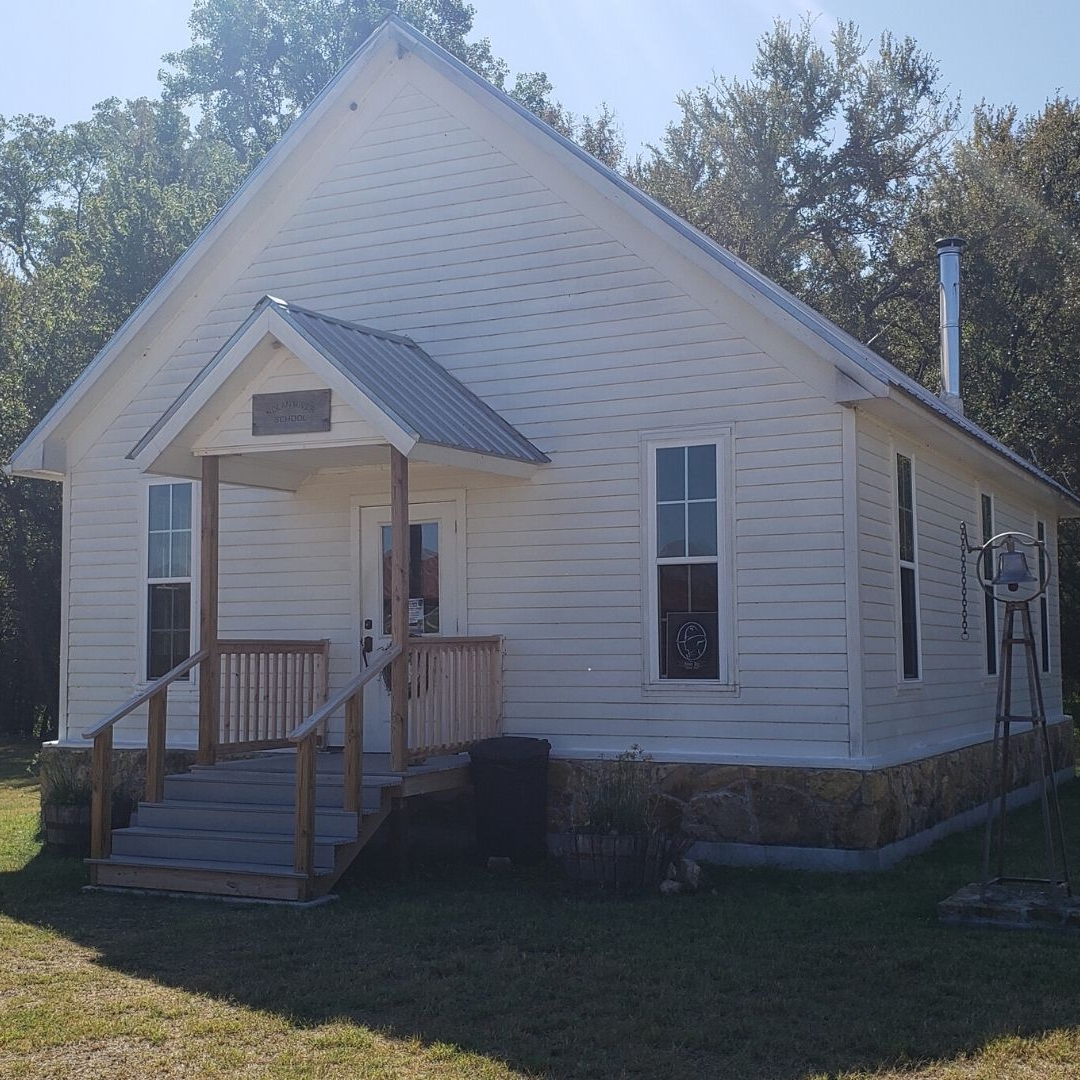
The Nolan River School operated from 1855 to 1877. We were proud to reopen the school in 2012, nearly 140 years after it closed its doors. Not only is the Nolan River School a treasured piece of Johnson County History, it is also a window into a forgotten time.
We knew once the school was reopened that we wanted to offer a unique experience for children of this millennium to experience something completely foreign to how they learn today. This is why we are happy to transport students and teachers back in time and give them a day of learning in...
Read The Rest
The Original Johnson County Courthouse
The Oldest Log Courthouse in Texas
Built in 1855 by William O'Neal, this 16-square-foot log courthouse is made of logs overlaid with clapboard and cost just 49 dollars to construct. Now, that same courthouse still stands, boasting the title of "the oldest log courthouse in Texas."
When this courthouse was built, Wardville held the first seat in Johnson County. Just over a year later, new laws stated that the county seat had to be within 5 miles of the center of the county. Thus, the newly built courthouse was abandoned.
Speaking to the construction of this structure, which was built more than 150 years ago, it remains in...
Read The Rest
Restored Stagecoach
19th Century Transportation
Bringing Hollywood to Cleburne, our restored stagecoach was made to be used in Western movies. It was even featured in two early John Wayne films.
We are honored to have this one of a kind stagecoach on the grounds of the Chisholm Trail Outdoor Museum. Not only does it allow visitors to get an up close and personal view of this long forgotten mode of transportation, but it lets people see how challenging traveling dit was to travel during the 19th century.
Getting places didn't happen quickly in those times. Though the distance from Cleburne to Forth Worth is just over 30...
Read The Rest
Stage Station/Saloon
Commemorating the Chisholm Trail's Heyday
Our stage station/saloon is an ode to what a hotspot the Chisholm Trail used to be. During the heyday of the Chisholm Trail, there were 17 saloons in the area. Not only does this represent the extracurriculars of the time, but the stage station is a representation of the stage line that ran straight through Cleburne.
During the busiest time of the Chisholm Trail, millions of heads of cattle were driven down the Chisholm Trail, making it a very busy route for both people and cows alike....
Read The Rest
Wardville Cemetery
Recreated and Restored
Though the original Wardville Cemetery has long been buried underneath the waters of Lake Pat, we are proud to have an historically accurate replica on our grounds. We have recreated and restored the Wardville cemetery just as it would have looked more than 200 years ago. Come visit us at the Chisholm Trail Outdoor museum and see for yourself what an 1800s cemetery would have looked like. ...
Read The Rest
Wardville Sheriff's Office and Jail
Original Details from the 1800s
In 2010 we added the Wardville Sheriff's Office and Jail to the museum collection. Although the Sheriff's Office and Jail themselves are not original, we are lucky to have the original jail door from the 1855 jail at Wardville. The jail door is inside the building, and features a charming old west scene showcasing what the jail would have looked like in the 1800s.
Over the years, these doors have been used at three different jails. Bringing them back to the Chisholm Trail Museum was symbolic as this was their original location....
Read The Rest
A Fantastic Outdoor Museum Experience For All Ages
Multiple Museum Attractions Available!