About Us
Welcome to the Chisholm Trail Outdoor Museum
Take a Step Back in Time
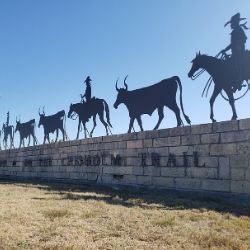 Welcome to the Chisholm Trail Outdoor Museum. Tepees and life size cattle drive silhouettes greet you as you enter the museum, along with the “WELCOME TO CLEBURNE * ON THE CHISHOLM TRAIL” eighty foot stone wall. These unique museum features are fast becoming one of the most recognized and photographed landmarks in this part of Texas. We offer free docent-led tours with advance notice on Thursdays, Fridays, Saturdays and Sundays.
Establishing Johnson County
This historical site in Johnson County, Texas is the home of Wardville, the first county seat of Johnson County established in 1854, nine years after Texas gained statehood. Originally this was Navarro County, which ran from west of Cleburne at Glen Rose all the way to Corsicana in east Texas. Since the only transportation in those days was horse or mule powered, it was difficult to do county business in an area so vast. The state recognized the need to divide the county into multiple, smaller counties.
William O’Neal donated eighty acres to the new Johnson County, and he and his brother built the first courthouse. That very courthouse is here, on-site, and is now accepted as the oldest log courthouse in Texas. From 1854 to 1856 with Wardville as the county seat, there were twenty-nine families living between Town Branch Creek and where the courthouse is today.
Chisholm Trail Outdoor Museum Features
The Wardville Cemetery has been relocated and restored. At present we have a Stage Station/Saloon representing the stage line that ran out of Cleburne, and the seventeen saloons in this area during the heyday of the Chisholm Trail cattle drives.
The Sheriff's Office and Jail were added in 2010. We are proud to have acquired the jail doors from the original 1855 jail at Wardville. These historic doors were used in three different jails over the years and have made their way back to their original location. The metal cell bars were used in the county work farm in 1885.
The Nolan River School operated in the area from 1855 to 1872. We were honored to reopen it in 2012. Here, we take teachers and students back in time by teaching them how things were done in the mid 1800's. For more information on setting this up for your school, please contact us.
In the mid 1800s every community or large ranch had to have a blacksmith shop. Keeping in line with history, we added our blacksmith shop to the museum in 2009.
In those days, many Native Americans stole horses, but wouldn't touch mules. Because of this, mule stations were set up along the stage coach route for the stages to swap for fresh teams. The Chisholm Trail Outdoor Museum is fortunate, through the kindhearted donation of Elizabeth and Bob McWhorter, to have an original mule barn from the Freeland Ranch that serviced the Johnson Stage Line in the mid to late 1800s.
The McWhorters were also generous enough to donate a three-hundred-pound mile marker from along the original stage route. The "B M 9" on the mile marker let the stage passengers know they were nine miles from Buchanan.
As you drive to the top of the hill you will see a restored stagecoach. This coach was built for movies and used in several Westerns, including two early John Wayne movies. Back when stagecoach was the premiere mode of transportation, the travel time from Cleburne to Ft. Forth by stage was seven hours.
Our Mission
Keeping the Past in the Present
The mission of the Johnson County Heritage Foundation, Inc. is to preserve the rich heritage of this historic site and advance the "Way It Was" to future generations.
All Chisholm Trail Outdoor Museum activities are made possible through the generous financial and in-kind support of individuals such as yourself. Your gift will strengthen and support educational programs, exhibit updates, collection acquisitions, oral history programs and ongoing museum activities.
The Johnson County Heritage Foundation is an all volunteer foundation, with no paid staff, with the exception of the Big Bear Native American Museum. All funding goes directly to maintenance, restoring existing artifacts and reproducing period structures.
MAILING ADDRESS
JCHF, Inc.
P.O. Box 771
Cleburne, Texas 76033 -0771
Yearly dues are $20. Membership year begins January 1st each year. To request a membership application, email your request to carriereynolds8@yahoo.com or call Carrie at (254) 998-0261.
The People Who Make It Work
We are proud to have a team of people who work hard to make sure the Johnson County Heritage Foundation, Inc. continues its good work in the community.
2020 Officers
- CEO/Chairman- David Murdoch
- President- Randolph Garner
- Secretary- vacant
- Treasurer- vacant
2020 Directors
- Robert McMinn
- Matt Lee
- Gail Hazlewood
- Greg Harmon
- Bill Pfeiffer
- Nancy Holland
- Burton Barr
- Chuck Lumus
- Jimmy Smith, II
- Kathy Cannella
2020 Advisory Board
- Adam King
- Ben Oefinger
- John Percifield
- Curtis Rives
- Lowell Smith Jr.
- George Turner
Big Bear Native American Museum Curator
- Jimmy E. Smith, II
2020 Docents
- Sam & Cheryl Keller
- Bill Pfeiffer
- John Jober
- Robery McMinn
- Carl Irish
- Randolph & Charlene Garner
- Carrie Reynolds
- David Murdoch
- Charlotte Whitney
- Ken Richardson
Maintenance Supervisor
- Carrie Reynolds
Grounds
- Community Service Workers
- Johnson County Sheriff's Department
Helping Partners
- Johnson County Historical Commission
- Cleburne Chamber of Commerce
- City of Cleburne
A Project of: Johnson County Heritage Foundation, Inc.
Endorsed by: The Cleburne Chamber of Commerce & Johnson County Historical Commission
The Last Roundup
A Great Western Epic
 During the latter years of the 19th century, the times and the land combined to produce a great Western epic. Soon after the Civil War, major cattle companies seized vast tracts of land and discouraged interlopers by the use of hired gunmen. Visionary Joseph G. McCoy drove his herd to the railhead in Kansas beginning an era of the Chisholm Trail.
The 19th Century to Now
Millions of animals, men and women went up the trail that crossed Johnson County, Texas during the years from 1867-1889. This legendary trail came right through what is now the Chisholm Trail Outdoor Museum, where you will be greeted by the largest silhouette cattle drive in the nation, as you arrive in Cleburne, Texas from the west on Highway 67.
Longhorn Trail
Thousands of Longhorns in the Brazos
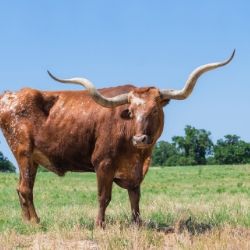 The last recorded roundup and cattle drive of driving Texas Longhorns to market on the Texas section of the Chisholm Trail occurred on November 14, 1914 in far southwestern Johnson County. Barbed wire continued to be installed along the former open ranges of Johnson County and the railroads began to raise freight rates.
The rate increases, as well as the closing of the open ranges, and the open ranges affected the main trail to Abilene. Many drovers routed extra miles to bypass these obstacles. Many of the old timers considered the railroads' actions to be blackmail, and range wars pursued with the cutting of barbed wire.
Disgruntled Ranchers Take Action
The hanging tree at Five Oaks, near the Brazos River in southwestern Johnson County, served as a meeting place for five disgruntled ranchers who decided to jointly roundup their herds and trail them off to market before all the routes were fenced off.
With the sun high in the sky, ranch owners John Landers, Lee Cameron, Will Kenser, John Nickell, Nort Jones and their drovers, Clarence Hutcheson, Lonnie Peterson, Chester Jones, Jim Baker, and the Russel boys, rushed their 2500 head of Texas Longhorns into the cold waters of the Brazos River. The huge herd strung out for a mile and as they trotted up the slope at Bluff Mills, the Klondike Mountains and Hamm's Creek served as a barrier for controlling the herd's direction to Cleburne and on to market.
The Origin of Johnson County
Established for More Than 165 Years
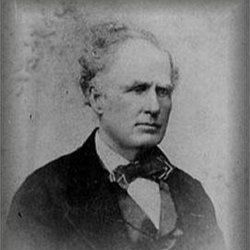
Johnson County, named for Texas Confederate Colonel Middleton T. Johnson, was created on February 13, 1854 by the Fifth Legislature. The first permanent settlements in the area were in the mid 1840's.
The first federal census that included Johnson County was in 1860; the population totaled 4,305.
Becoming Johnson County
For nine years after Texas gained statehood, the area was part of another larger county. The main reason for this change was because the existing county was over 100 miles across and people traveled by horse and buggy. The law at the time stated that a person must be able to travel to and from town by horseback or wagon in one day.
Jesse Chisholm
Trader, Guide, and Interpreter
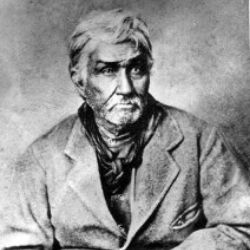
Jesse Chisholm, the trail's namesake, was an Indian trader, guide and interpreter who blazed a route from Wichita, Kansas, across the Indian Territory (present day Oklahoma) to the Red River.
Throughout all of his trading, Chisholm learned more than ten languages, which put him in high demand as an interpreter. He also set up multiple trading posts and was a sought after guide.
Ironically, Chisholm never herded cattle, though his name ended up being used for the famous trail. When Texas cattlemen were looking for way to transfer their cattle to profitable norther markets, they did so on the trail Chisholm blazed.
Joseph G. McCoy
Capitalizing on the Northern Cattle Boom
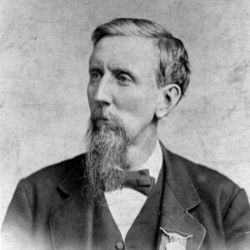
In 1867, an Illinois livestock dealer named Joseph McCoy, working with the Kansas-Pacific Railroad, established a cattle-shipping terminal in Abilene, Kansas. This made Abilene one of the first cow towns.
Capitalizing on the Northern Cattle Boom
McCoy knew that his $2 Texas Longhorns were worth nearly 10 times that amount in the booming North. After he established Abilene, McCoy carried out extensive advertising in Texas, encouraging people to send their cattle up to Abilene by way of the Chisholm Trail.
He was the first to exploit the expanding railroads to move cattle to distant markets. Later, the invention of barbed wire was responsible for closing the open range that made large cattle drives possible.
Outdoor Museum at Lake Pat Cleburne
See What It Was Like To Live In The Wild West
The Chisholm Trail Outdoor Museum sits on the Chisholm Trail which was a trail used in the late 19th century to drive cattle overland. The museum includes a life size cattle drive silhouettes, Johnson County's original courthouse, a working blacksmith shop, a stagecoach station, teepees and more.
The museum attractions sit close to and overlook the banks of Lake Pat Cleburne. With beautiful Texas skies and amazing views of the lake, you'll actually start to feel like the pioneers did when they came across this beautiful spot.
The Big Bear Native American Museum featuring a collection of Native American artifacts donated by Leonard “Big Bear" Beal and additional artifacts supplement his collection to provide a complete overview of Native Americans in North America from their arrival over 13,000 years ago to the present.
Accessible by the public, the Chisholm Trail Outdoor Museum is an open area where visitors can learn about how the cattle drives along the trail impacted life and the history of the first county seat of Johnson County, Texas.
Come check out the original courthouse, a stagecoach station, a blacksmith shop, and many more attractions on the banks of Lake Pat Cleburne on the Chisholm Trail. Be sure to check out the many Historical Markers along the Chisholm Trail for a fun driving adventure.
A Fantastic Outdoor Museum Experience For All Ages
Multiple Museum Attractions Available!